
Premium Content:

British government apologises for banning gays from the military

Twenty years after it lifted its policy banning gays from the military the British government has apologised for the policy and the service personnel who were discharged.

- Advertisement -

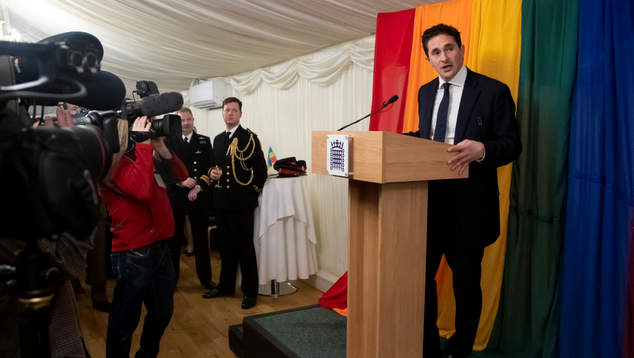
Addressing a group of veterans at a function at Westminster the UK’s Minister for Defence, Johnny Mercer, said the ban was wrong.

“It was unacceptable then and it is unacceptable now, and as the Minister for Defence, people and veterans, I wanted to personally apologise to you today for those experiences.” Mercer said.

Mercer, who was in the army and did three tours of Afghanistan said the discrimination LGBTI service people experienced was unacceptable.

“If I am honest, it is hard to conceive – as a more contemporary veteran of our armed forces, the environment too many of you experienced when you were serving,” he said.

“Where being a member of the LGBT+ community would have got you detained, followed by a dishonourable discharge from the military.

“Volunteering to serve is an act of bravery in itself; to volunteer for the chaotic, challenging nature of service life and yet within that community, which so many of us are so proud of, experience discrimination of this sort is unacceptable.”

Prior to 2000 if a person was found to be gay, lesbian or bisexual there were discharged from armed service, and any medals they had been awarded for bravery were stipped from them.

Last month a landmark High Court case in Britain saw a veteran from The Falklands War have his medals returned after the court ruled he had been discriminated against.

Joe Ousalice, now 68, was dismissed from the navy in 1993 after 18 years service. The former radio operator had served in The Falklands, Northern Ireland and undertaken missions in the Middle East.

More court cases are expected in the future as more people demand their awards for service and bravery are reinstated.

OIP Staff


Latest

World AIDS Day 2025 calls for no one to be left behind

WAAC CEO Dr Daniel Vujcich provided a snapshot of HIV in Western Australian in 2025.

Debate on the Surrogacy and Reproductive Technology bill continues

Labor are hoping to pass the bill before the end of the year but progress is slow.

President of International AIDS Society highlights the global challenges

Dr Beatriz Grinsztejn says there are huge challenges for the global response to the HIV following funding cuts from the USA and other nations.

Vinnie, Emily and Coco face the chopping block in Big Brother

The series has just days left to run and the housemates are being culled at a rapid rate.

Newsletter

Don't miss

World AIDS Day 2025 calls for no one to be left behind

WAAC CEO Dr Daniel Vujcich provided a snapshot of HIV in Western Australian in 2025.

Debate on the Surrogacy and Reproductive Technology bill continues

Labor are hoping to pass the bill before the end of the year but progress is slow.

President of International AIDS Society highlights the global challenges

Dr Beatriz Grinsztejn says there are huge challenges for the global response to the HIV following funding cuts from the USA and other nations.

Vinnie, Emily and Coco face the chopping block in Big Brother

The series has just days left to run and the housemates are being culled at a rapid rate.

Victorian Government introduces bill to provide protections for intersex people

If passed, Victoria will follow the ACT in introducing such protections, becoming the first state to do so.

World AIDS Day 2025 calls for no one to be left behind

WAAC CEO Dr Daniel Vujcich provided a snapshot of HIV in Western Australian in 2025.

Debate on the Surrogacy and Reproductive Technology bill continues

Labor are hoping to pass the bill before the end of the year but progress is slow.

President of International AIDS Society highlights the global challenges

Dr Beatriz Grinsztejn says there are huge challenges for the global response to the HIV following funding cuts from the USA and other nations.